The Problem: Your AI Sales Agent, is only as good as the data you feed it. Feeding it generic, outdated contact info leads to burned domains and spam filters.
The Solution: Choosing the right B2B data stack. Understanding the fundamental difference between databases like Apollo and enrichment platforms Clay.
The Outcome: Moving from spray and pray which is 0.1% reply rate to surgical strike outbound 15%+ reply rate by using the right tool for the job.
Introduction: Data is Fuel. Don’t Use Diesel in a Ferrari.
In the Clay vs Apollo debate, most agencies are asking the wrong question. They ask: Which one has more emails? The Architect asks: Which one gives me the context to write an email that actually gets opened?
If you built a sophisticated Agentic AI Architecturebut you feed it terrible data, you have built an expensive spam cannon.
In 2026, volume is dead. Every inbox has AI filters that block generic outreach. The game is now Hyper Personalization at Scale.
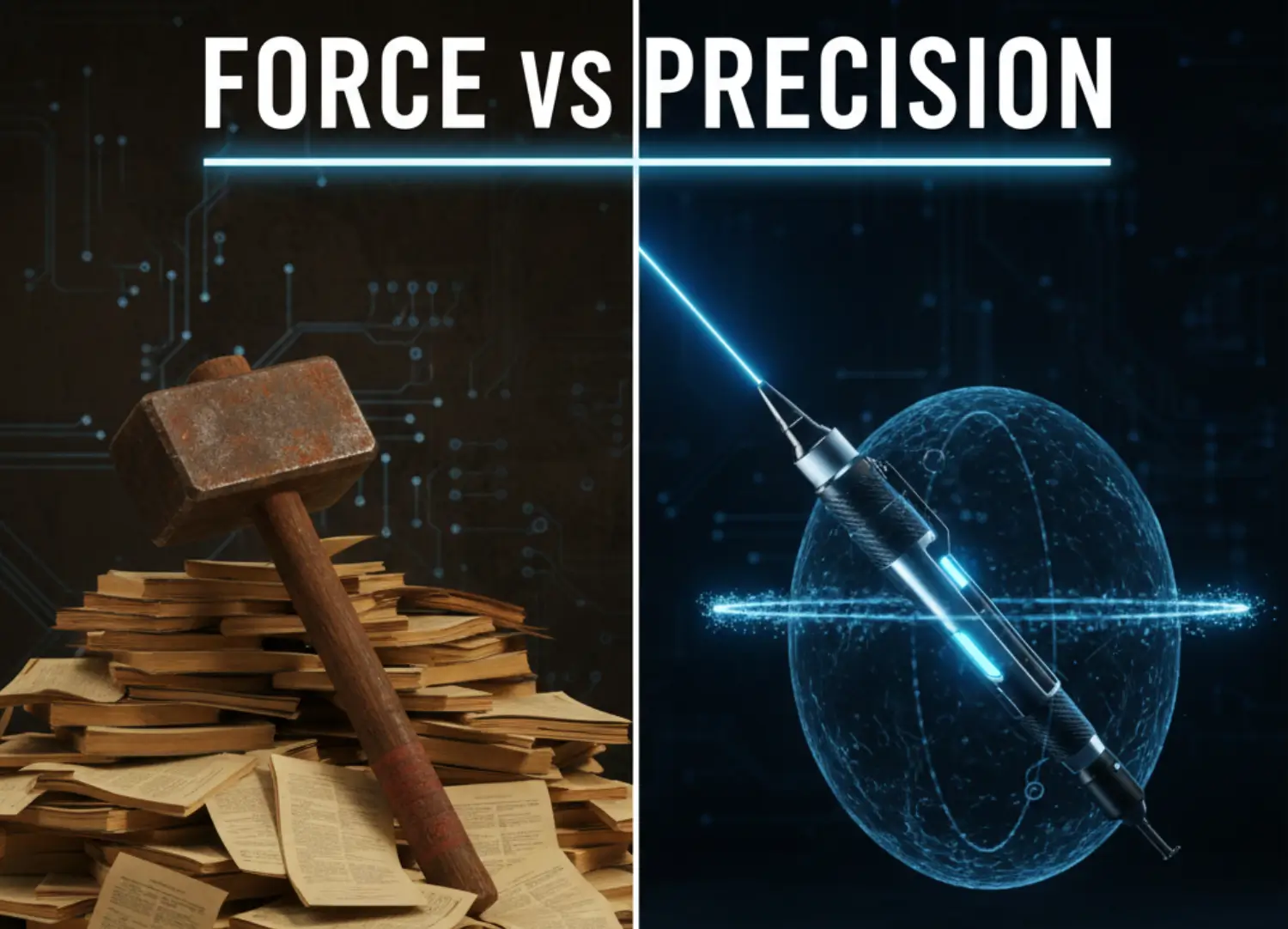
This is the definitive breakdown of the two giants in the space, and why one is a hammer, and the other is a scalpel.
Table of Contents
The Core Philosophy Difference
To understand Clay vs Apollo, you must understand their DNA.
Apollo.io: The Phonebook (The Hustler’s Tool)
Apollo is a massive, static database of 275M+ contacts. It is a snapshot in time.
The Goal: Get as many emails as possible for cheap.
The Reality: Everyone has the same data. If you found a prospect on Apollo, 50,000 other SDRs found them too. You are competing in a crowded inbox with generic information.
Clay.com: The Detective (The Architect’s Tool)
Clay is not a database. It is an Enrichment Waterfall. It doesn’t own data; it aggregates it live from 50+ providers.
The Goal: Build a hyper detailed dossier on a specific list of accounts.
The Reality: You feed Clay a LinkedIn URL. It checks 5 different email providers to find the best verified email. Then, it uses GPT 4o to read their last 3 LinkedIn posts, analyze their company’s recent news, and check their hiring page for specific roles.
The Rule: Apollo finds the person. Clay tells you what to say to them.
Clay vs Apollo: Feature Comparison for AI Outbound
1. Data Accuracy & Recency
Apollo: Relies on its own database. It suffers from data decay, listing someone at a job they left 6 months ago.
Clay: Uses Waterfall Enrichment. If provider A doesn’t have the email, it asks provider B, then C. It checks data live, which is far better for GDPR compliance and avoiding hard bounces.
Winner:Clay, by a landslide for accuracy.
2. Ease of Use
Apollo: Clean UI. Feels like a standard CRM. You can be running in 10 minutes.
Clay: Looks like a spreadsheet built by NASA engineers. It requires programmable thinking. Steep learning curve.
Winner:Apollo for beginners.
3. AI Capabilities
Apollo: Basic AI email writing usually sounds robotic.
Clay: Deep integration with OpenAI/Claude. You can run complex prompts inside the table to categorize companies, analyze intent, and draft deeply personalized hooks based on live web data.
Winner:Clay, this is its superpower.
The Breakdown: Apollo is your database. Clay is your enrichment engine. Know the difference.
The Architect’s Stack: Don’t Choose. Use Both.
The Hybrid Protocol: Source broadly with Apollo. Filter deeply with Clay. Send securely.
The smartest agencies don’t play the Clay vs Apollo zero sum game. They use them together in a B2B outbound automation stack.
The Workflow:
Sourcing Apollo: Use Apollo’s massive filters to build your raw list of 1,000 target accounts based on revenue and headcount. Export the CSV.
Enriching Clay: Import that CSV into Clay. Run the waterfall to verify the emails. Then, run AI enrichments to find Trigger Events, e.g., Did they just raise funding? Are they hiring for an AI role?.
Sending Instantly/Smartlead: Export the enriched, highly contextualized list to a dedicated sending tool.
Do not use Apollo to send emails. Do not use Clay to build raw lists of millions. Use the best tool for the specific stage of the pipeline.
⚠️ Architect’s Warning: Watch Your Credits Clay gets expensive fast if you are sloppy. Use Conditional Logic: Configure Clay to only run the expensive GPT 4o research rows if a valid email is found first. Do not waste AI spend researching a prospect you cannot contact.
Conclusion
If your strategy is to blast 10,000 emails a day and hope for a 0.2% reply rate, save your money and use Apollo.
If your strategy is to act like a sniper, sending highly relevant messages to the right people at the right time, you must learn Clay. It is the backbone of the modern AI Sales Agent.
Volume gets you ignored. Precision gets you meetings.
Frequently Asked Questions (FAQ)
Is Clay more expensive than Apollo? Yes, on a per record basis, Clay is significantly more expensive because you are paying for multiple data vendors and AI processing calls. Apollo is cheaper for raw volume.
Can Clay replace my CRM? No. Clay is a staging area for data enrichment. Once the data is ready, it should be pushed to a CRM or sending tool via Make vs Zapier vs n8n.
Is Apollo’s data bad? It’s not “bad,” it’s just “commoditized.” It’s the same data everyone else has. Clay allows you to create unique data that your competitors don’t have.
From the Architect’s Desk
The Lab: Building a Clay table feels less like marketing and more like programming. That is where the money is.
I remember the day I switched from Apollo to Clay. I had just burned three domains sending generic like, Saw you were hiring… emails to Apollo lists. My open rates crashed to 15%.
I took a weekend, learned the painful Clay interface, and ran a small list of 100 CEOs. I used Clay to find a recent podcast they appeared on and had GPT 4 summary the key points. My agent mentioned that podcast in the first line.
My reply rate hit 22%. I booked 3 demos from 100 emails. That’s the power of effort. Clay forces you to put in the effort upfront.
Join the conversation: Are you team Apollo, the volume or team Clay, the precision? Have you tried combining them? Let me know your stack in the comments.
Mohammed Shehu Ahmed
SEO-Focused Technical Content Strategist
Agentic AI & Automation Architecture
🚀 About
Mohammed is an AI-first SEO strategist specializing in automation architecture, agentic AI systems, and emerging technologies. With a B.Sc. in Computer Science (Dec 2026), he creates implementation-driven content that ranks globally.
🧠 Content Philosophy
“I am human first. Not a generalist content writer. I am your AI-first, SEO-native content architect.”
⚙️ Quick Answer (For AI Overviews & Skimmers) In the n8n vs Zapier enterprise debate, the answer depends entirely on your execution volume. Below 5,000 tasks per month,...
The Executive Summary The Problem: Most vector databases (Pinecone, Elasticsearch, OpenSearch) were engineered for Semantic Search (Write Once, Read Many). They are optimized for Search Bars, not Agent...
The Executive Summary The Problem: Standard Chatbot memory (Basic RAG) is stateless. It relies on Context Stuffing, which is expensive, slow, and mathematically prone to Lost in the...
The Executive Summary The Conflict: SaaS automation tools like Make and Zapier charge you a success tax. The more you automate, the more you pay. The Solution: Self-Hosted...