


EXECUTIVE SUMMARY
- The Problem: Most companies hire consultants who deliver slide decks, or freelancers who write spaghetti code in Zapier. Neither builds an asset. They build technical debt.
- The Shift: The market is moving toward automation engineering services. This is not advice. This is the delivery of compiled, self-healing operational infrastructure.
- The Imperative: Stop buying hours. Start buying systems.
INTRODUCTION
There is a massive gap in the B2B market between SaaS and Employees.
If you have a problem, you typically either:
- Buy a SaaS: e.g., Salesforce and hope it fits your process.
- Hire a Human: e.g., An Admin and hope they follow the process.
Automation engineering services fill the void. It is the practice of building custom, sovereign software that executes your specific business logic without the overhead of a full engineering team. It is the commercialization of the AI Workflow Architect.
At RankSquire, we do not sell consulting. We sell compiled operations.
Table of Contents
THE FAILURE MODE (THE CONSULTING TRAP)
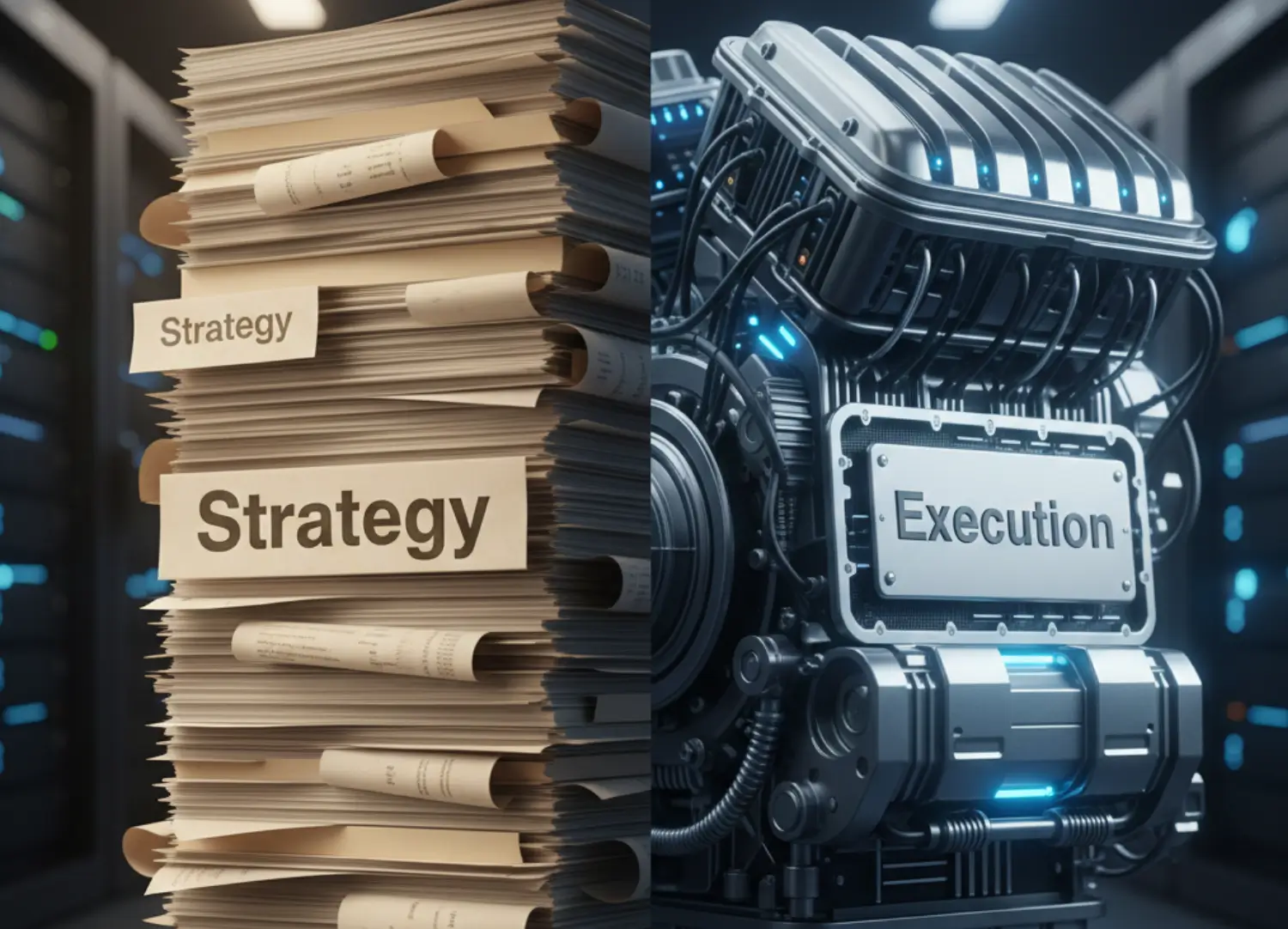
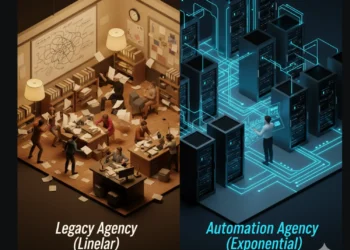
The Old Way relies on Deliverables vs. Executables.
- The PDF Handoff: Traditional consultants analyze your business and hand you a PDF report saying You should automate this. That is useless. Automation engineering services deliver the active webhook that actually does the work.
- The Freelancer Fragility: You hire a freelancer on Upwork to build a script. They vanish. The API changes. The script breaks. Your business stops. True engineering services include Infrastructure as Code (IaC) and error-handling protocols.
- The Scope Creep: Without an engineering mindset, projects become ongoing support. A proper engagement has a definition of done: “The system runs without human intervention for 30 days.”
The Metric of Failure:
Businesses utilizing standard IT Consulting see a 20% efficiency gain but retain high labor costs. Businesses utilizing automation engineering services see a 90% reduction in manual touchpoints because the labor itself is digitized.
AI Workflow Architect: Enterprise Automation Architecture (2026)
THE ARCHITECTURE (THE SOW FRAMEWORK)

We do not write Retainers. We write Statements of Work (SOWs) based on System State.
The 3 Phases of the Engagement:
1. The Schematic Phase (Discovery)
- Activity: Process Mapping.
- Deliverable: A BPMN (Business Process Model and Notation) diagram.
- Logic: We do not touch a keyboard until the logic is proven on paper.
- Example: Input: Lead Form -> Condition: Revenue > $10M -> Action: Post to CRM & Slack.
- Value: This blueprint is IP (Intellectual Property). Even if you don’t build it, possessing the map has value.
2. The Build Phase (Execution)
- Activity: Configuring the Sovereign Stack.
- Deliverable: Docker Containers & Webhooks.
- Logic: The automation engineering services team deploys n8n, sets up the Postgres database, and connects the API endpoints.
- Constraint: Zero Magic. Everything is documented in the nodes.
3. The Stress Test (Validation)
- Activity: Synthetic Load Testing.
- Deliverable: The Uptime Report.
- Logic: We flood the system with 1,000 dummy leads to ensure the Dead Letter Queue catches errors. The system is not delivered until it survives the flood.
THE ECONOMICS (BILLING FOR OUTCOMES)
Automation engineering services command higher fees because they deliver CapEx (Capital Expenditure) assets, not OpEx (Operating Expenditure) labor.
| Metric | Traditional Consulting | Automation Engineering |
| Billing Model | Hourly / Retainer | Fixed Scope / Project |
| Deliverable | Advice / Strategy | Code / Workflow |
| Asset Value | Low (Knowledge leaves with consultant) | High (System stays on your server) |
| Maintenance | High (Dependent on consultant) | Low (Self-healing logic) |
| ROI Timeline | 6–12 Months | 30 Days (Immediate labor reduction) |
The Pricing Reality:
A consultant charges $150/hour. An engineer delivering a Lead Routing System charges $15,000 flat. The client pays more for the engineer because the outcome is guaranteed and the recurring labor cost is eliminated.
THE TECHNICAL STACK
When you hire automation engineering services, you are hiring a stack-specific expert.
- The Orchestration Layer: n8n. The industry standard for visual, self-hosted engineering.
- The Compute Layer: DigitalOcean / AWS. Where your sovereign infrastructure lives.
- The Database Layer: Supabase / Postgres. Where your data is logged (Sovereignty).
- The Interface Layer: Interfaces (n8n) or Softr. If a human needs to click a button, we build a simple UI.
CONCLUSION
The market is flooded with AI Experts who are just power users of ChatGPT.
True automation engineering services are rare. They require a blend of business acumen to understand the process and systems engineering to automate the process. This is the future of the B2B service sector.
You have two choices:
- Hire advice.
- Hire architecture.
Stop consulting. Start engineering.
FAQ: OBJECTIONS & RISKS
1. Why not just use an internal developer?
Internal developers are focused on your core product or app. They hate Operations Work, connecting CRMs, parsing emails. Automation engineering services specialize in this glue code that holds the business together.
2. Is this Custom Software Development?
Technically, yes. But it is Low Code Engineering. It moves 10x faster than traditional coding because we use pre built nodes (n8n) for the heavy lifting and only write code (Javascript/Python) for the complex logic.
3. What happens when the API changes?
Part of the engineering service is the Warranty Period usually 30 days. After that, clients typically move to a small Maintenance Retainer to handle API updates, similar to how you pay for HVAC maintenance.
FROM THE ARCHITECT’S DESK
We were engaged by a Logistics Firm processing 500 Bills of Lading per day manually.
They looked for Consultants to train their staff. Instead, we provided automation engineering services. We built a Vision AI pipeline (n8n + GPT-4o) to read the PDFs and insert the data into their ERP.
Result: They redeployed 4 data entry clerks to customer support. The system paid for itself in 6 weeks.
THE ARCHITECT’S CTA
This engagement model is for organizations that are done experimenting.
If you are ready to engage automation engineering services to permanently solve your operational bottlenecks. Stop being a Hustler. Become the Architect.
Every automation I build is bespoke, real, and ready to scale your business. No demos, no templates just results.
Apply to work with me today → Application Form

Comments 2